Generative AI ROI: How to Measure Real Value from AI Investments
When you build a generative AI, a system that creates text, images, or other content using machine learning models. Also known as AI-generated content, it’s not just a tech experiment—it’s a business decision that needs to pay for itself. Too many teams spend thousands on OpenAI API calls, GPU clusters, and custom prompts, then can’t answer one simple question: Are we getting more out than we’re putting in? The answer isn’t in how many features you shipped, but in how much time, money, or risk you actually saved.
Real generative AI ROI, the measurable financial return from deploying generative AI in production doesn’t come from hype. It comes from tracking what matters: token usage, model switching, autoscaling efficiency, and user behavior. If your team is burning cash on idle GPUs or overpaying for GPT-4 when a smaller model does the job, you’re not innovating—you’re leaking money. Companies that win use LLM billing, the cost structure tied to how much data an AI model processes like a dashboard, not a mystery bill. They know exactly how many tokens their users consume per session, which models perform best for each task, and when to pull the plug on a feature that’s costing more than it’s worth.
And it’s not just about cost. AI deployment, the process of moving an AI model from testing into live use fails more often than it succeeds. Only 14% of proof-of-concept AI projects make it to production. Why? Because teams ignore governance, security, and user patterns. You can’t optimize ROI if you don’t know who’s using it, why, and what happens when it goes wrong. That’s why the posts here cover everything from generative AI cost optimization to safety classifiers, from multi-tenancy controls to truthfulness benchmarks. This isn’t theory—it’s what teams are doing right now to turn AI from a budget drain into a profit engine.
Below, you’ll find real-world guides from developers who’ve cracked the code: how to slash cloud bills by 60% with spot instances, how to measure policy adherence with KPIs that actually matter, how to avoid vendor lock-in while keeping quality high, and how to stop paying for AI that hallucinates more than it helps. No fluff. No buzzwords. Just the metrics, tools, and tactics that separate the winners from the waste.
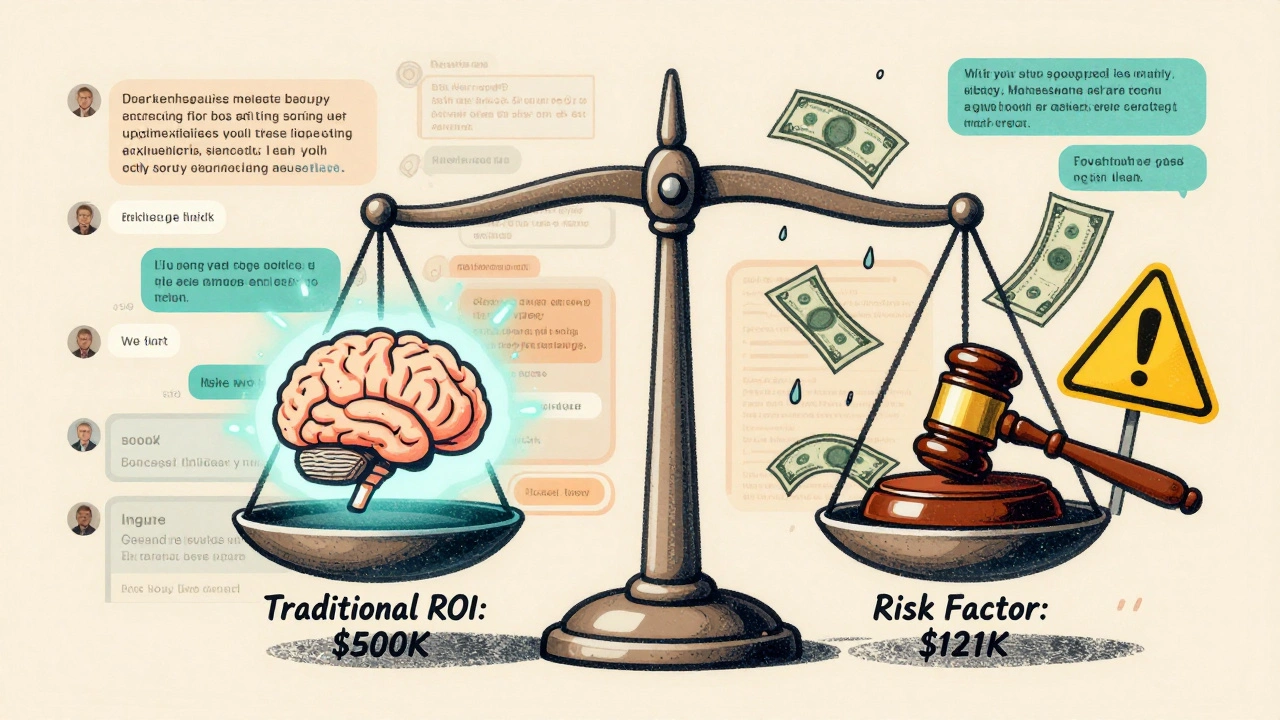
Risk-Adjusted ROI for Generative AI: How to Calculate Real Returns with Compliance and Controls
Risk-adjusted ROI for generative AI accounts for compliance costs, legal risks, and control measures to give you a realistic return forecast. Learn how to calculate it and avoid costly mistakes.
Read More