California AI Regulation: What Developers Need to Know About Compliance and AI Deployment
When you're building AI systems in California, you're not just writing code—you're navigating California AI regulation, a set of state laws and proposed rules that govern how artificial intelligence systems are developed, deployed, and monitored to protect public safety and rights. Also known as California AI laws, these rules are becoming the de facto standard for U.S. tech teams, whether you're based in the state or not. If your app uses generative AI to process user data, make decisions, or generate content, these regulations directly impact your architecture, data handling, and deployment workflows.
California’s rules don’t just target big tech—they hit every startup and developer using LLMs. The AI data privacy, the legal requirement to disclose when AI is used to process personal information and to allow users to opt out of automated decision-making. Also known as AI transparency rules, it forces you to track where training data came from, who it affects, and how it’s used in real-time systems. Then there’s LLM deployment, the process of putting large language models into production environments where they interact with users, handle sensitive inputs, or influence outcomes like credit scores or job applications. Also known as AI production systems, it now requires documented risk assessments, bias audits, and monitoring logs under California’s proposed AI Act. You can’t just plug in an API and call it done. You need to answer: Is your model being used in a high-risk context? Are you logging inputs and outputs? Can users request explanations or corrections?
These aren’t theoretical concerns. Companies have already faced fines for using AI to screen resumes without disclosing it. Others were forced to shut down chatbots that generated medical advice without proper disclaimers. The generative AI governance, the framework of policies, tools, and processes that ensure AI systems operate legally, ethically, and safely in production. Also known as AI compliance frameworks, it’s no longer optional for any team handling user data in California—or any company serving California residents. That means you need to bake in data minimization, consent flows, and audit trails from day one. It’s not about slowing down—it’s about building smarter. The posts below show you exactly how to do it: from setting up automated compliance checks in your CI/CD pipeline, to using tools like Microsoft Purview to track data lineage, to designing LLM prompts that avoid prohibited outputs without sacrificing performance. You’ll find real examples of what works, what failed, and how to avoid the costly mistakes others made.
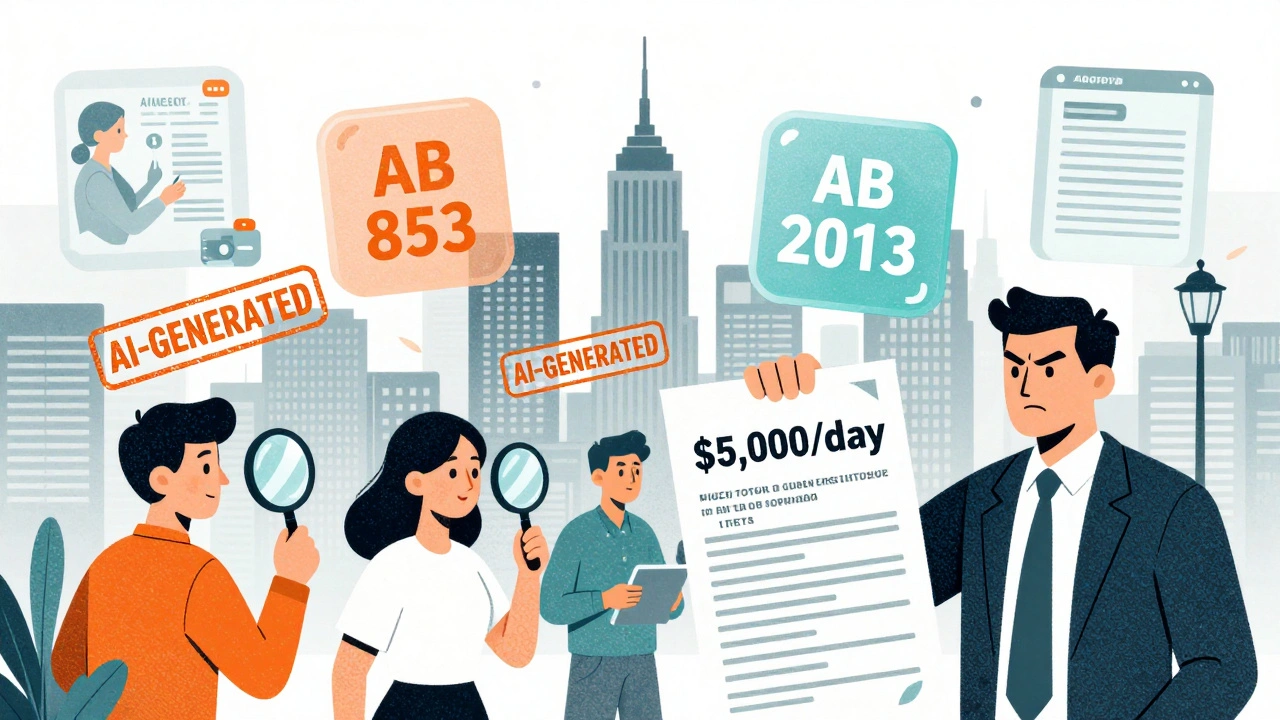
State-Level Generative AI Laws in the United States: California, Colorado, Illinois, and Utah
California leads U.S. state-level AI regulation with strict transparency, consent, and training data laws. Colorado, Illinois, and Utah have narrower rules focused on insurance, deepfakes, and privacy. Businesses must understand state-specific requirements to avoid penalties.
Read More